
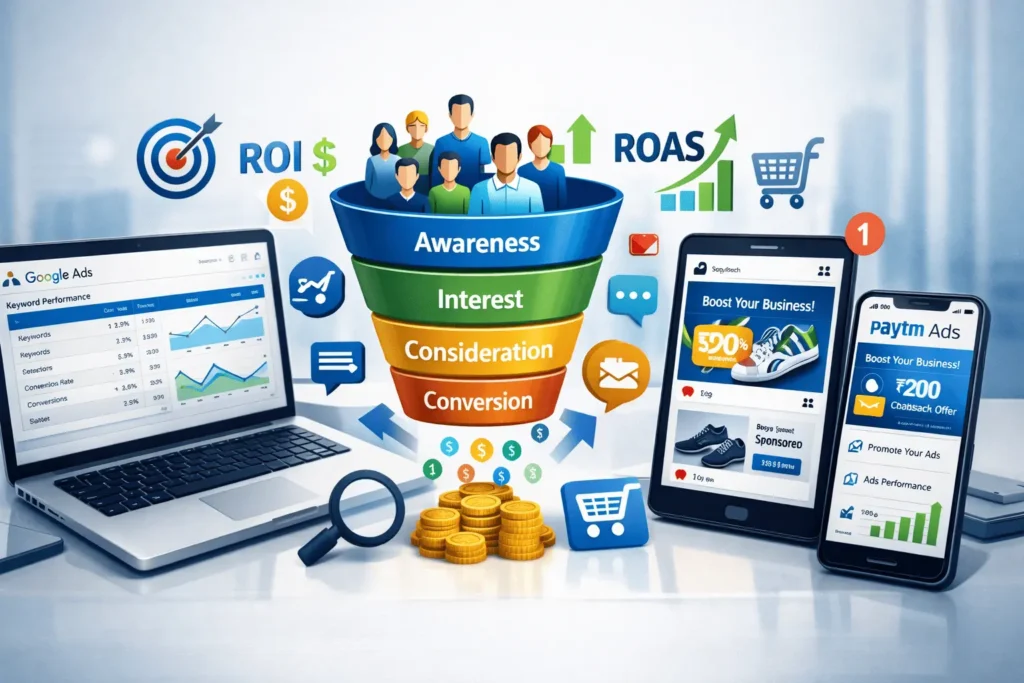
Why Multi-Channel Marketing is the Future
Relying on one platform limits your reach and growth potential. A multi-channel approach helps you:
- Reach users at every stage of the funnel
- Improve brand recall and trust
- Increase customer touchpoints
- Reduce customer acquisition cost (CAC)
- Improve ROAS (Return on Ad Spend)
- Scale ecommerce and D2C brands faster
Businesses that combine programmatic advertising (Paytm Ads) with search marketing (Google Ads) and social media campaigns see significantly better results.
Deep Understanding of Each Platform
Paytm Ads – Transaction-Based Conversion Engine
Paytm Ads are one of the most powerful tools for high-intent audience targeting.
Key Strengths:
- Access to millions of active users
- Transaction-based targeting
- Hyper-local campaign capability
- Mobile-first advertising
- Offer & cashback integration
Best Use Cases:
- Local business promotions
- Ecommerce product offers
- D2C repeat purchases
- Conversion-focused campaigns
Paytm Ads are highly effective for purchase optimization for D2C brands and ecommerce sales growth.
Google Ads – Capturing High-Intent Traffic
Google Ads targets users actively searching for solutions.
Campaign Types:
- Search Ads (high intent keywords)
- Shopping Ads (for ecommerce website growth)
- Display Ads (brand awareness)
- YouTube Ads (video engagement)
Why It Works:
- Users already have buying intent
- Keyword targeting is precise
- High conversion potential
Google Ads is essential for ecommerce marketing services and SEO + PPC combined strategies.
Social Media Marketing – Demand Creation & Engagement
Social media platforms like Instagram & Facebook are key for:
- Building brand awareness
- Influencer marketing campaigns
- Audience engagement
- Retargeting users
Why It Matters:
- Creates demand before search
- Builds trust with visual content
- Drives traffic to website
Social media is crucial for D2C brand marketing and ecommerce growth strategies.
Full Funnel Omnichannel Strategy
Stage 1: Awareness (Top Funnel)
Social Media Marketing:
- Run video ads and reels
- Use influencer collaborations
- Target interest-based audiences
Paytm Ads:
- Promote brand visibility
- Run banner campaigns
- Offer introductory discounts
Goal: Create awareness and attract new users
Stage 2: Consideration (Middle Funnel)
Google Ads:
- Target keywords like:
- “best ecommerce products online”
- “buy [product name] online”
Social Media Retargeting:
- Show product demos
- Share testimonials
- Highlight benefits
Goal: Build trust and push users toward decision
Stage 3: Conversion (Bottom Funnel)
Paytm Ads:
- Offer cashback deals
- Limited-time discounts
- Exclusive offers
Google Remarketing:
- Target cart abandoners
- Show dynamic product ads
Goal: Maximize conversions
Advanced Multi-Channel Execution Strategy
Step 1: Audience Targeting Strategy
Segment your audience based on:
- Location (city-based targeting)
- Behavior (shopping habits)
- Interests (product category)
- Transaction data (Paytm insights)
This ensures better results in performance marketing campaigns.
Step 2: Funnel-Based Campaign Structure
Create separate campaigns for:
- Awareness
- Consideration
- Conversion
Each stage should have different:
- Creatives
- Messaging
- Target audience
Step 3: Creative Optimization
Social Media:
- Lifestyle visuals
- Emotional storytelling
- Influencer content
Google Ads:
- Keyword-rich ad copy
- Strong CTA
- Benefits-focused messaging
Paytm Ads:
- Offer-driven creatives
- Cashback highlights
- Urgency-based messaging
Step 4: Landing Page Optimization
Your landing page must:
- Be mobile-friendly
- Load fast
- Have clear CTA
- Include trust signals
- Show product benefits
A strong landing page improves:
- Conversion rate
- ROAS
- Customer experience
Step 5: Retargeting Strategy
Retarget users who:
- Visited your website
- Clicked ads
- Added to cart but didn’t buy
Use:
- Social media retargeting
- Google remarketing
- Paytm offer campaigns
Step 6: Budget Allocation Strategy
Example:
- 40% → Google Ads (intent-based traffic)
- 30% → Social Media Marketing
- 30% → Paytm Ads (conversion-focused)
Adjust based on performance.
Advanced Growth Tactics
 Data-Driven Marketing
Use analytics tools to track:
- User behavior
- Conversion rates
- Campaign performance
This helps in optimizing campaigns for better ROI.
A/B Testing
Test:
- Ad creatives
- Audience segments
- Landing pages
Continuous testing improves results.
Personalization Strategy
Show:
- Personalized offers
- Location-based ads
- Behavior-based recommendations
This improves engagement and conversion rates.
Mobile-First Optimization
Since Paytm users are mobile-heavy:
- Optimize mobile UX
- Simplify checkout
- Improve loading speed
Common Mistakes to Avoid
 No funnel strategy
Poor audience targeting
Ignoring retargeting
Weak creatives
No tracking system